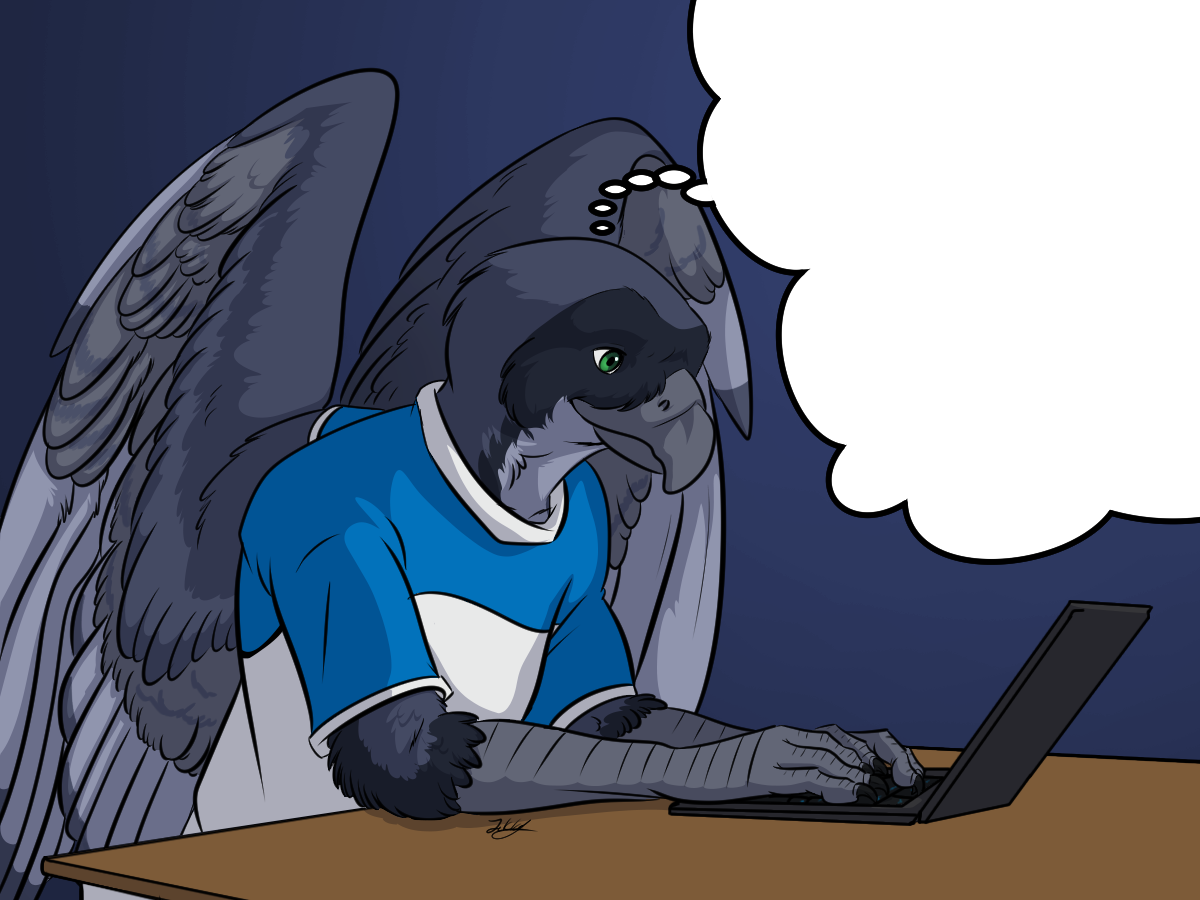
I’ve long wanted a feather from a red-tailed hawk. I’d find some significance in having one, however, just personal, nothing religious. In the USA, owning raptor feathers is governed under various federal laws, and is punishable with up to 2 years of jail time, per feather. Furthermore, no mens rea of intent to break the law needs to be proven, the statute is written such that it does not require proof of ill intent.
There are exceptions for licensed rehabbers, licensed falconers, and people with Native American ancestry. The first two are for “spare parts”, and the last is for religious observance. I qualify as none of these.
Now, the reasoning for this law is sound. While DDT did precipitously reduce raptor populations in the 60s, a topic of which we give the chemical far too much of the blame and the farmers far too little, before that, during the early 20th century, humans became more aware of their impact on the environment, with the extinction of both the Passenger Pigeon and the Carolina Parakeet. Somewhere along the line, people began to make attempts at biome engineering, in order to make areas more pleasing to humans.
Part of this was to see birds of prey as ‘pests’ that would be hunted and killed, particularly during migration on the migration corridors where the birds gravitate towards due to favorable winds. Most notably, several states put bounties on American Goshawks, $5 a carcass. Pennsylvania, site of Hawk Mountain Sanctuary, put this bounty in in 1929, during which you might understand that there were economic issues rising. $5 in 1930, is just under $100 today. So you might wonder how the whole exercise turned out, given that migrating hawks can be hard to determine the species of on the wing for a novice.
The hunters, of course, didn’t care to bother with even that and just killed anything they saw, and sorted out what they could get a bounty for from the corpses.
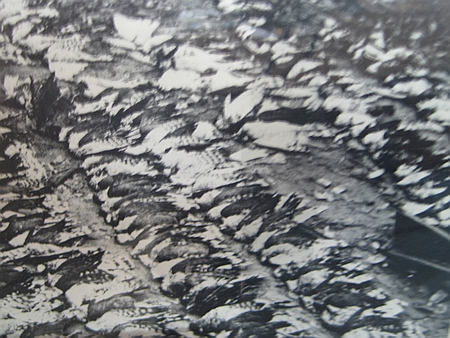
The photographs like above led to a shift in public sentiment over time, as well as the establishment of Hawk Mountain Conservancy itself. And also improved federal protection for raptors, in order to try and prevent this.
I completely support this goal, but you might think, “If someone’s out in the forest and shoots a bird of prey, how does the law know?” And the answer generally is, it doesn’t. This is the reason for the way the law is written; it’s impossible to know after-the-fact if the feather was molted by the bird, or the bird was killed for it, and as such the law assumes the worse case.
However, in practice, it rarely works out this way.
In 2002, heiress Gwynne McDevitt and an employee jointly were convicted for a scheme to trap and kill 171 hawks of various types on her property. They ran a dog-hunting school, and the game birds they’d release to train the dogs as caged hunts would sometimes get nabbed by raptors. She was required to pay about 140K in fines and do 200 hours community service, and publish an apology letter in various magazines. This was a pathetic punishment for one of her wealth and far below what the law would allow. She died in 2022, and this was not mentioned in her obituary.
Less than ten years later, a federal sting operation called “Operation High Roller” was conducted. Roller Pigeons are a type of pigeon subbreed that have a tendency to seize up in flight and stall out, performing aerobatic maneuvers as they fall. Some people like to raise them to watch this, but to get this effect, you need to release the bird so it can fly, and a pigeon having a midair seizure has basically is wearing a neon sign to every predator in range that says, “I AM DEFENSELESS-EAT ME NOW.”
After losing birds to this, the clubs of enthusiasts used the then relatively new internet to share tips on handling this. Traps you could make that would mist the captured raptors with ammonia and bleache (which react to form toxic Chlorine gas). A man advocating for how much frustration you could vent by beating one of the birds with a baseball bat. One man had a five gallon pail filled with raptor talons that he’d clipped off birds he’d killed.
Legally, this would be ‘dead to rights’, and so multiple people got hauled up on charges, whereupon they largely were sentenced to things like community service, and the judges refused to issue fines or felonies, citing that “a fine would be overkill” and a “burden on the defendant.” (Personally, while fines are a pretty weak punishment to begin with, if a fine isn’t burdensome, it is meaningless to me.)
Nobody really got dealt with in any serious manner; Roller Pigeon clubs still use the “we were entrapped!” defense when the subject comes up.
And if you think that the punishment would be this light in other cases, I can reliably assure you that people who treat dogs and cats this way don’t get anywhere near this level of leniency. (In fact, it’s been observed that animal cruelty cases tend to draw more public attention than child abuse cases, which is sad)
And the crux of my irritation is the law’s binding of me, while on the flip side, the actual bad actors the law was made to deal with are basically let off on judicial nullification. Which makes me question why the law exists at all, if not exercised.
I understand this is a bit in the weeds, needed to vent this, and have a reference for later. And I think this helps with current political issues as well, without directly opening up the flamewar.
Thoughts can be put in comments, or sent to blogsquawk@vershaft.com
-Arrow